
Does losing build character? Or does it just kinda suck?
Americans love a winner. But are there useful life lessons to be learned from failure?

The Central Connecticut State College basketball arena was bright and clean and well-lighted. There were a dozen band members tucked into one corner of the stands and playing with zest. At either end of the basketball court cheerleaders cheered and the dance danced. The smattering of fans - no more than 30 - settled in as the big screen monitor showed a montage of highlights from the season. It must have required some creative editing. The Central Connecticut Blue Devils women’s basketball team had played 25 games this season and they had won exactly none.
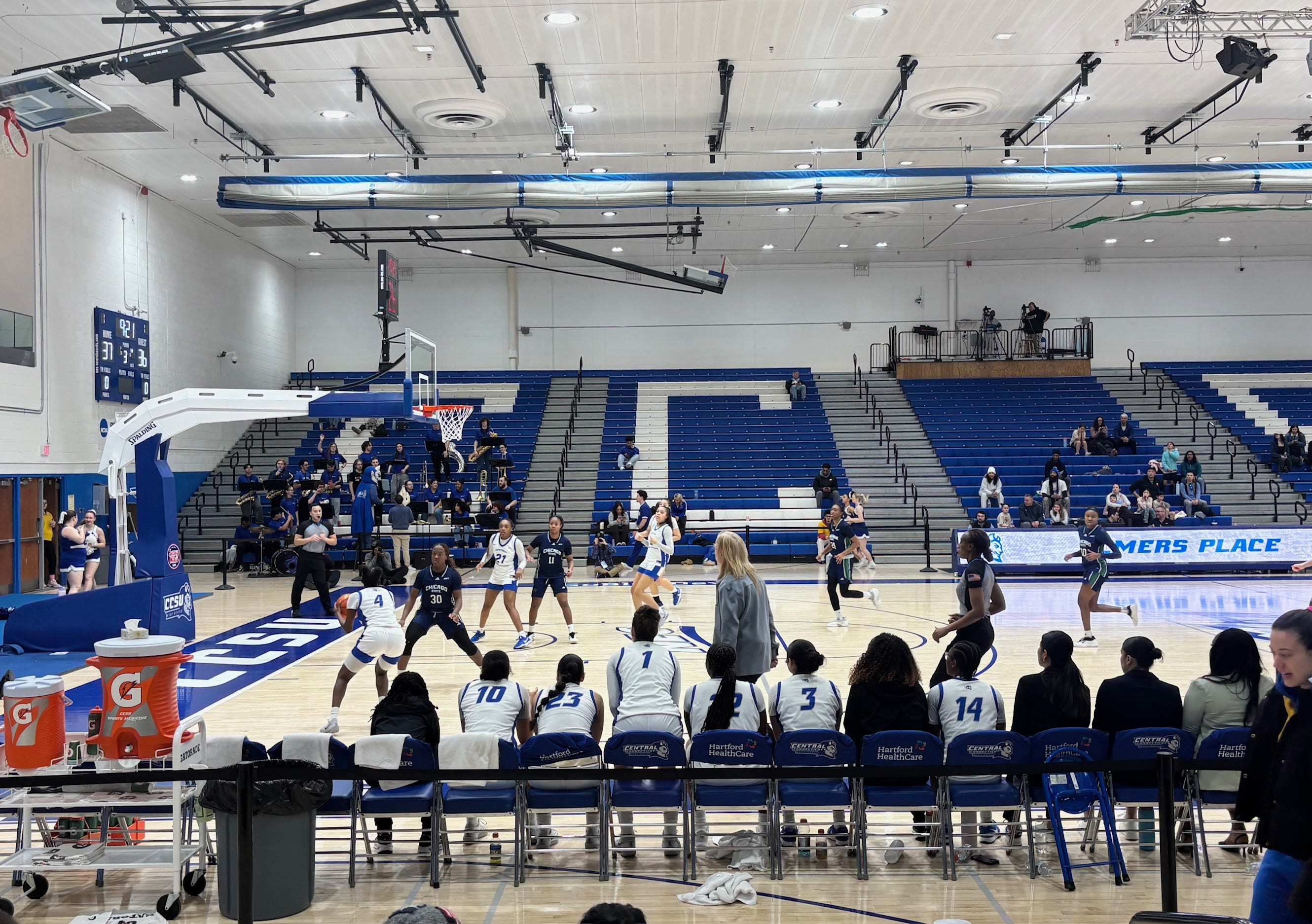
Central Connecticut Blue Devils (in white) battle the Chicago State Cougars
I was there on a cold Saturday afternoon in New Britain, Connecticut to see Central Conn take on the visiting Chicago State Cougars. I was there because I wanted to see how a winless team, at the time No. 362 out 363 teams in Division I NCAA ranking of women’s basketball teams, would play. I was there to bear witness to what losing - epic losing - does to you. Would the Blue Devil players step up? Would they give up, even if subconsciously? And more. Does failure and adversity push you to dig deeper and fight harder? Certainly it can. Or does it break your spirit and crush your soul? It can do that too.
People tend to have conflicted views of winning and losing, about success and failure. We like to say and believe that losing teaches us valuable, even noble life lessons. Overcoming adversity. Resilience. Determination. Perseverance. The German philosopher Friedrich Nietzsche famously wrote, “That which does not kill us makes us stronger.” But is that really true? Even if so, isn’t it true too that what doesn’t kill you sometimes just leave you wounded and broken. And, in reality, losing - especially frequent losing - is more likely to inspire scorn and derision than admiration. Our vernacular says as much. To be called a “loser” is an especially vicious and categorical slur. In the 1969 movie, They Shoot Horses, Don’t They?, one character - the emcee of the marathon dancing competition during the Depression (Gig Young, who won an Oscar for Best Supporting Actor for the role) - tells one desperate contestant (played by Jane Fonda), “I may not know a winner when I see one, but I sure as hell can spot a loser.”
But to be a winner… there’s the glory. Winning is respected. Revered. Envied.
Vince Lombardi, the legendary football coach, famously said, “Winning isn’t everything. It’s the only thing.” That was considered a golden nugget of wisdom, testimony to a commitment to excellence and success. It was not derided for being preposterous. Winning is the only thing? Who can meet that absurd standard? And if winning is the only thing, losing is what? Nothing?
In perhaps his most famous poem, If, Rudyard Kipling called success and failure imposters - “If you can meet with Triumph and Disaster/And treat those two imposters just the same” - and I think that comes closer to the complicated truth.
Everyone loses sometimes. Even Tom Brady. But there are the standard vicissitudes of life - you win some; you lose some - and then there are epic losing streaks that can shake the confidence and resilience of even the stoutest of us.
Columbia University football teams lost 44 straight games from 1984 to 1988. It was an NCAA record until it was surpassed by Prairie View A&M’s 80-game losing streak spanning 1989 to 1998.
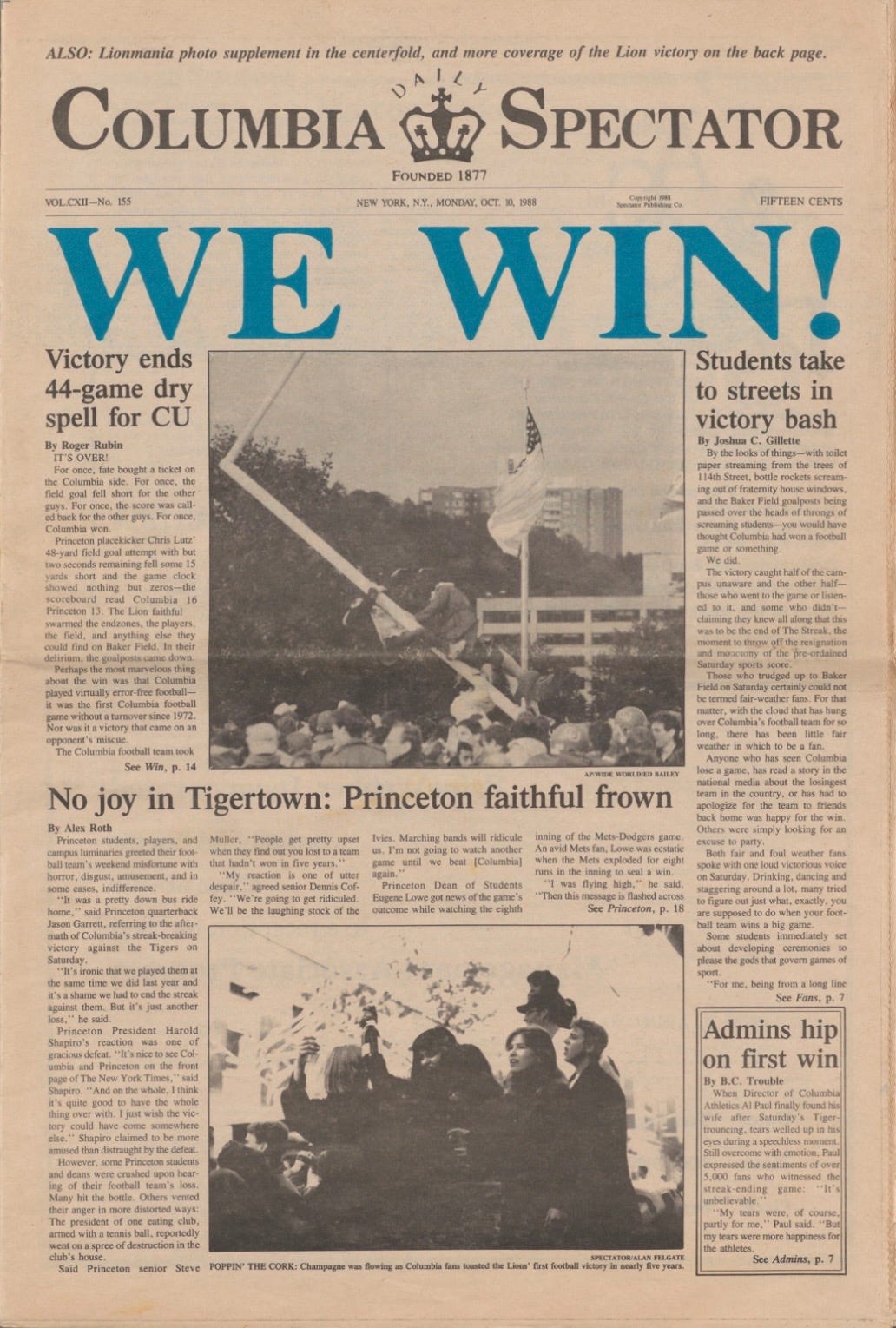
Columbia football team ends record 44-game losing streak on Oct. 11, 1988. Photo credit: Columbia Spectator
In pro football, the Tampa Bay Buccaneers entered the NFL in 1976 and lost their first 26 games over two seasons.
After one loss, Tampa’s coach, John McKay, was asked after one loss what he thought of his team’s execution.
“I’m in favor of it,” McKay replied.
The Bucs’ losing streak was not even the longest in pro football history. That honor goes to the Chicago Cardinals which dropped 29 straight games in the early 1940s.
In modern baseball, the 2024 Chicago White Sox went 41-121, a modern record.
But perhaps in the annals of sports quite matches the Cal Tech’s basketball team which once endured a 310-game losing streak in conference play* that spread over 26 years.
After Cal Tech beat Occidental College, 46-45, their coach, Oliver Eslinger, said, “We know what it’s like to lose. There’s the philosophy, ‘Oh, you can learn a lot from losing.’ I don’t want to learn anything more from losing. I want to start winning.”
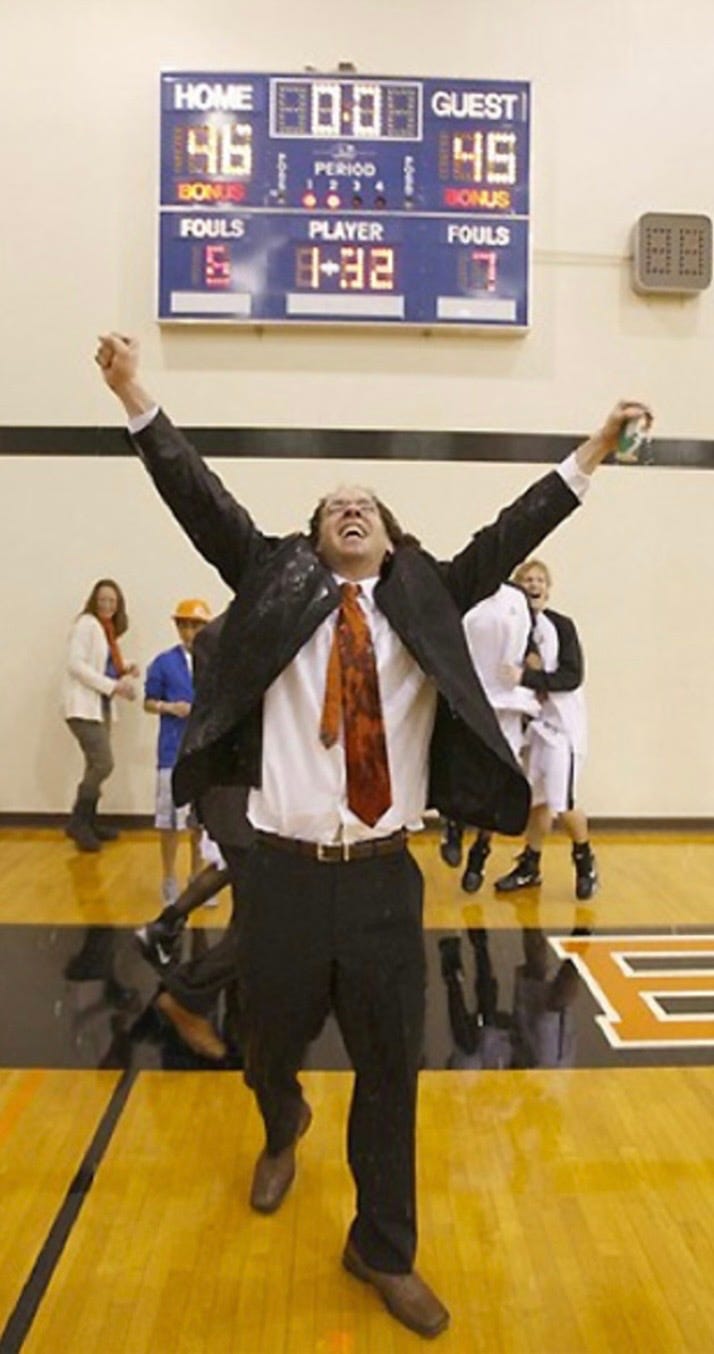
Cal Tech coach Oliver Eslinger celebrates the end of the 310-game conference losing streak. Photo credit: Sports Illustrated
Losing, of course, is hardly confined to sports. It happens throughout life. In fact, it’s an integral part of life.
But then there’s the story of Harold Stassen.
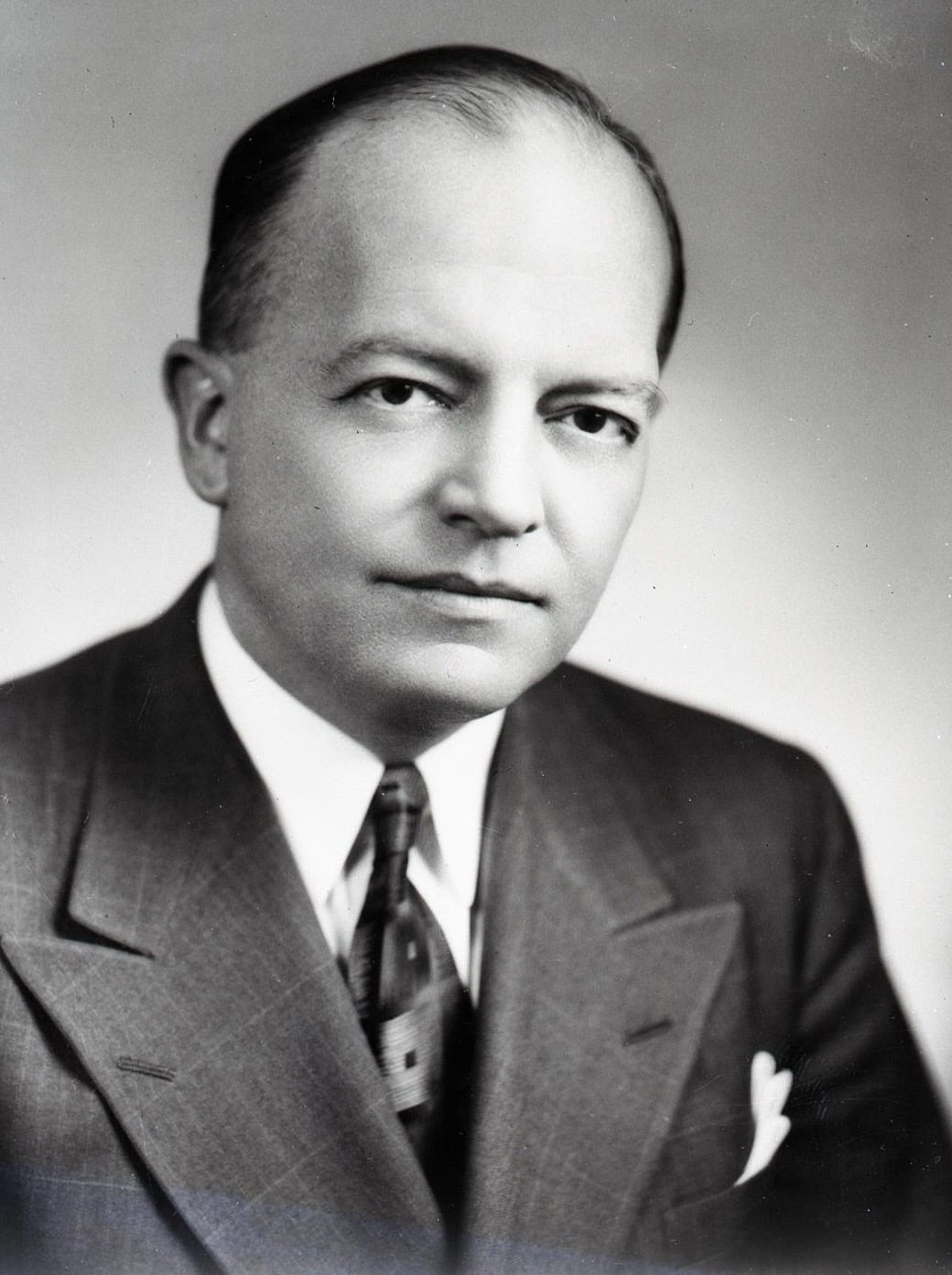
Harold Stassen ran for president 10 times. Photo credit: Cushing Memorial Library & Archives, Texas A&M University
In 1938, Stassen, a moderate Republican, was elected governor of Minnesota in 1938. He was 31. His future seemed bright. His future was bright. He gained national recognition as “boy wonder” of American politics. He served three consecutive terms as Minnesota’s governor, resigning in 1943 to serve in the Navy as chief of staff to Admiral William (Bull) Halsey. While serving in the military, he made a brief run for president in 1944. It would turn out to be just a prelude.
In 1948, Stassen ran for president again and was considered the front runner for the Republican nomination. For a while, things looked promising. He won four primaries. But he lost the crucial Oregon primary, and New York’s Governor, Thomas Dewey, went on to win the nomination at the GOP convention. Dewey ultimately lost to Harry Truman.
Stassen went on to become president of the University of Pennsylvania for four years but ran again in 1952. He lost then joined the Eisenhower cabinet. But he had imbibed from the fountain of presidential ambition and he must have liked the taste. He ran again for president in 1956. Again, it went nowhere. But he was only getting started.
Two years later, he ran for governor of Pennsylvania; in 1959, for mayor of Philadelphia; for president in 1960 and 1964; for Pennsylvania governor in 1966; for president in 1968, 1972 and 1976, then for U.S. Senate back in Minnesota in 1978. The result was same every time.
By the 1960s, Stassen was a very successful private attorney, but he didn’t or couldn’t stop trying to win high public office. He ran for president in 1988 and 1992. He had one last hurrah, or whimper, in 1994 when he ran for the Senate again. He lost. It was an epic losing streak. The former boy wonder was now nicknamed “The Grand Old Party’s grand old loser.”
In 1978, the Washington Post ran a profile of Stassen as he prepared for his ill-fated 1980 presidential quest.
“Like an old vaudevillian, Harold Stassen kept on,” wrote Paul Hendrickson. “He would have to be blind and mute to be unaware of the ridicule. He is neither. Ridicule isn’t important, Harold Stassen says. Playing a part ‘in the process’ is. Working to get your chance.”
His favorite poem, the article said, was Kipling’s If. Stassen died in 2001 at the age of 93.
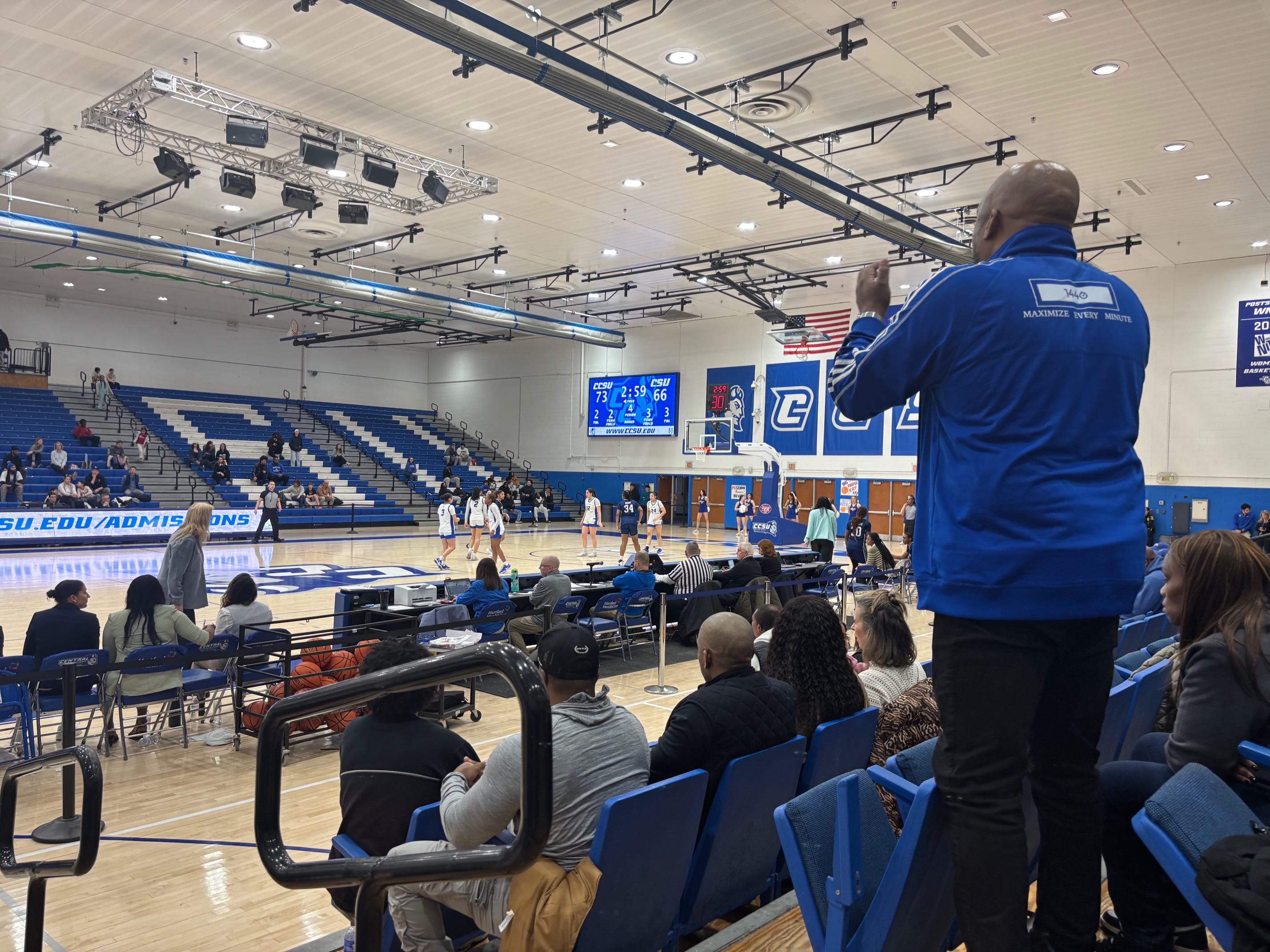
Central Conn takes the lead in the second half. Photo credit: Ron Claiborne
The Central Connecticut Blue Devils came out playing fiercely, but they kept making mistakes. An easy shot missed. An errant pass flying over the intended receiver’s head. Horrifying defensive lapses. Senseless turnovers. They fell behind early. I watched closely for signs of dismay as Chicago State opened up a six-point lead, but I saw none. They played hard and with determination. I watched Central’s coach, Kristin Caruso, pacing nervously in front of the home bench. Her movements were tense and jerky. I had looked up her bio a few days earlier. Caruso had played for the University of Connecticut in the 1980s just as it was becoming a national powerhouse in women’s basketball (UConn won its 12th NCAA championship last year.) Losing streaks were just not part of her basketball life experience.
Late in the first half, Central battled back and at halftime, they trailed Chicago State by just one point. They raced to the locker room in high spirits.
In the second half, something very strange happened. The Blue Devils started playing well, really well. Their defense toughened. Their offense started to click. Their shots were falling. The crowd, sparse as it was, was fired up. A large man in Central gear across the aisle from where I sat shouted instructions as if he were the coach. Each time Central scored, he leaped to his feet and loudly slapped the back of the (empty) seat in front of him. The cheerleaders cheered. The dancers danced. The band played on.
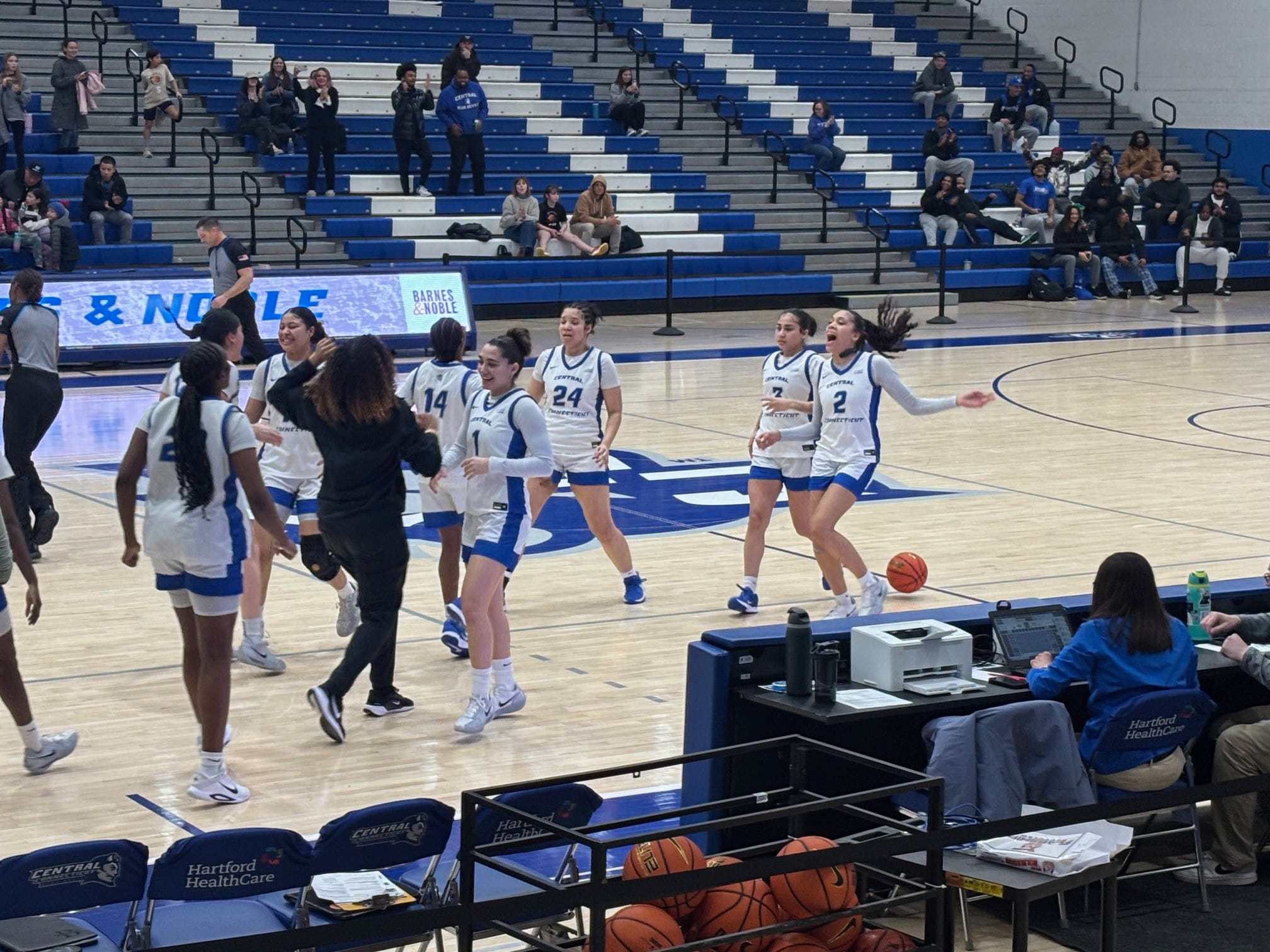
Central Connecticut wins! Photo credit: Ron Claiborne
Central Connecticut opened up a lead late in the game, and then it was over. The Blue Devils had prevailed, 86-75. The players seemed almost dazed for a moment, then jubilant. They hopped and danced across the court. They embraced each other in a tight sororal knot. Even Coach Caruso broke character and smiled. They finally had exorcised the demons of defeat. Enough with the character building. This was fun. This felt good. Really good. Maybe, just maybe, all that losing was the price that was demanded for this. The sweetness of victory long denied.
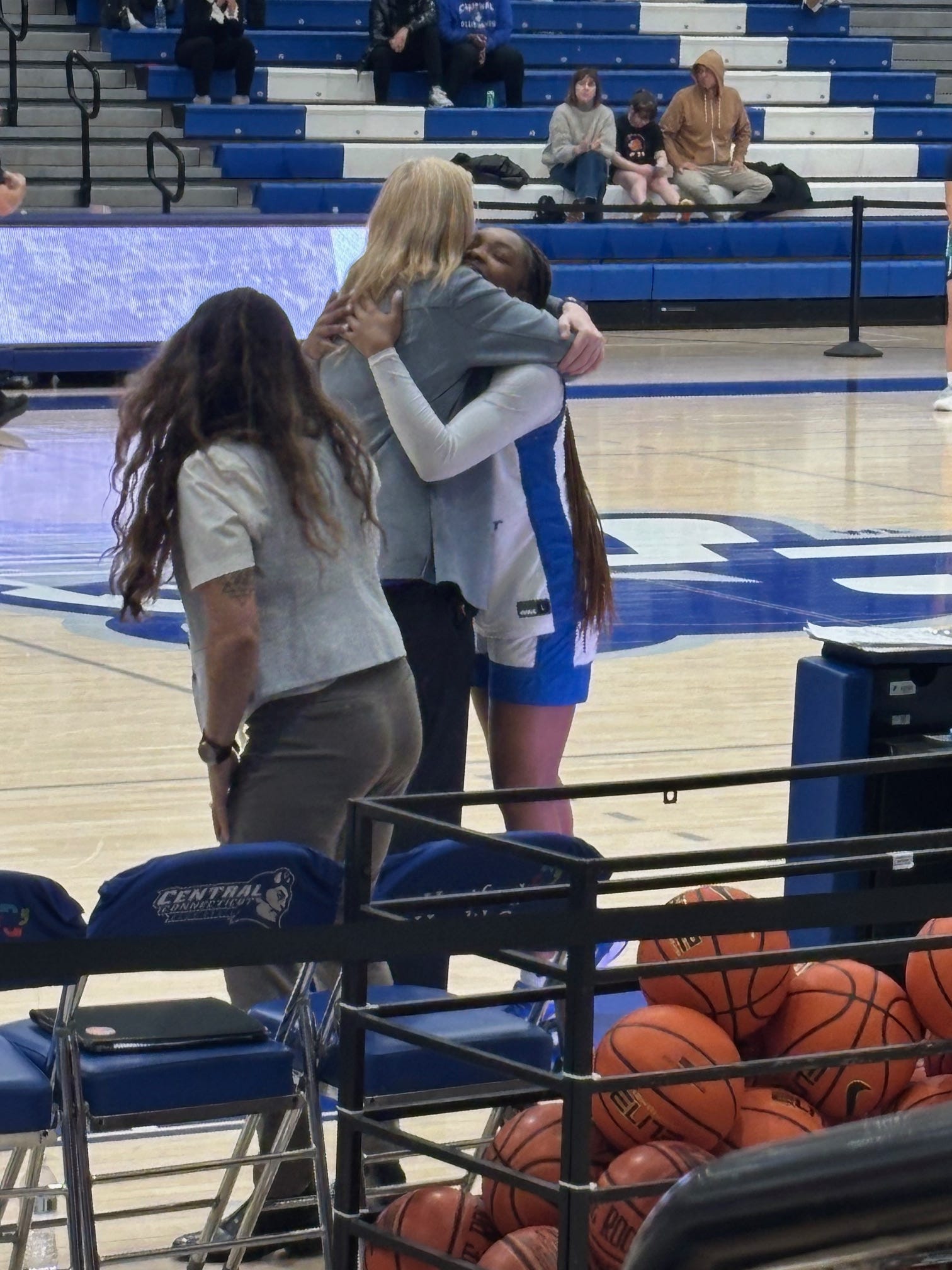
Coach Kristin Caruso and player embrace after the game. Photo credit: Ron Claiborne
*Cal Tech did win a handful of non-conference games during that streak
Ron....I read this story a while ago and forgot to tell you how wonderful it is. Thanks.
Bonnie
Fascinating topic. Thanks for covering it -- wild that you were there for the Win.